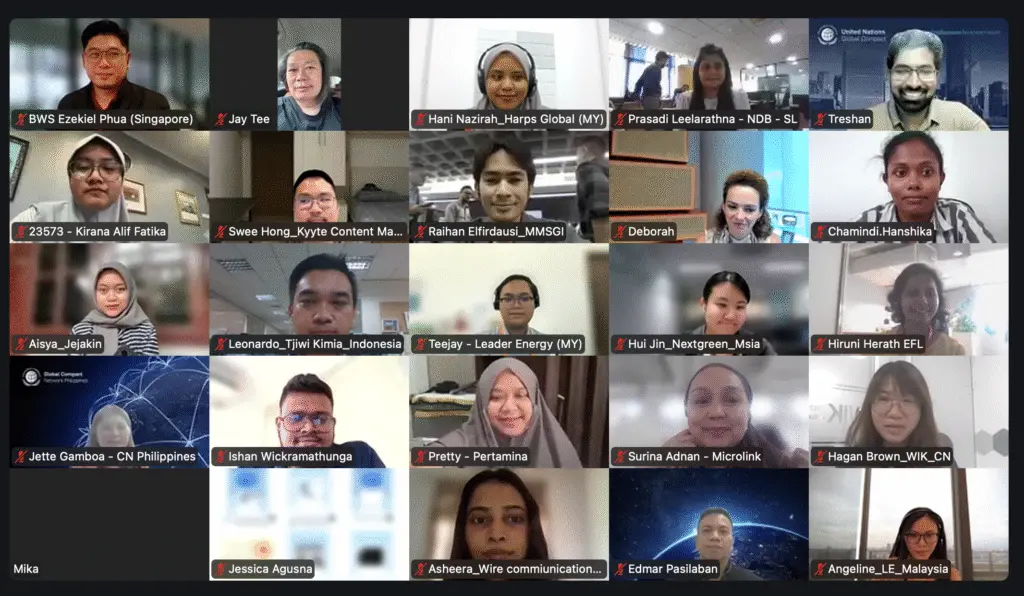
Jakarta, 9 September 2025 — The Climate Ambition Accelerator (CAA) 2025 convened regional business leaders for a dynamic peer-to-peer learning session, “The SBTi Business Case,” highlighting real-world pathways for companies to set and achieve science-based targets in line with the Paris Agreement.
Organized under the UN Global Compact, the session brought together sustainability practitioners from diverse sectors to exchange experiences, challenges, and solutions in their journey toward net-zero emissions. The event emphasized the practical business case for climate action—demonstrating how science-based targets drive innovation, efficiency, and long-term resilience.
Corporate Leaders Share Transformative Journeys
Three companies at the forefront of sustainability shared their pathways and lessons learned:
- Dilmah Ceylon Tea Company PLC (Sri Lanka) showcased its comprehensive climate strategy, becoming the first company in Sri Lanka’s Food and Beverage Processing sector to have its near-term, net-zero, and FLAG targets validated by the Science Based Targets initiative (SBTi).
Head of Conservation and Sustainability Rishan Sampath highlighted how Dilmah’s “Cup of Kindness” philosophy integrates environmental stewardship and carbon neutrality across its entire supply chain—achieving ISO 14064 and ISO 14067 certifications and advancing deforestation-free commitments by 2025. - PT Bank Rakyat Indonesia (Persero) Tbk (BRI), represented by Bayu Andi Taufan, ESG Senior Manager, shared the bank’s progress in aligning finance with climate goals. Using the Partnership for Carbon Accounting Financials (PCAF) methodology, BRI measures and discloses financed emissions, aligning with global frameworks like SBTi and TCFD.
“Doing the right thing keeps us relevant and resilient in a rapidly changing world,” Bayu noted, emphasizing BRI’s commitment to net-zero by 2050 and the importance of embedding ESG principles across all levels of the organization. - Teejay Group (Sri Lanka), presented by Mendaka Hettithanthri, Deputy General Manager and Head of Sustainability, detailed its swift progress from commitment to SBTi validation within nine months. Teejay’s decarbonization strategy includes renewable energy investments, energy efficiency upgrades, and digital traceability, with validated near-term targets to reduce Scope 1 & 2 emissions by 42% and Scope 3 by 25% by 2030.
“Achieving net-zero isn’t a solo journey—it’s a collective one,” Mendaka remarked, underscoring collaboration as the foundation for industrial transformation.
Empowering Businesses through Knowledge and Collaboration
The session encouraged open dialogue and regional learning, enabling participants to discuss technical challenges—such as Scope 3 measurement, FLAG targets, and data limitations—while identifying opportunities to accelerate ambition.
By sharing successful examples from leading Asian companies, the session underscored that science-based targets are not only a climate imperative but also a driver of competitiveness, investor confidence, and innovation.
As the CAA 2025 progresses, the UN Global Compact continues to equip businesses with the tools, expertise, and peer networks needed to turn commitments into measurable impact—advancing collective progress toward a net-zero and resilient global economy.