Jakarta, 22 October 2025 — The third session of the Public-Private Dialogue Series: Internal Audit and the Fight Against Corruption brought together experts and practitioners from across sectors to discuss “Good Corporate Governance in Action: Integrating ICoFR, Investigative Audits, and Digital Forensic Accounting.”
Co-hosted by the UN Global Compact Network Indonesia (IGCN), UNODC Indonesia, and the Indonesia Internal Audit Community (IIAC–GRC Community), the event explored how internal audit functions, data-driven forensics, and governance frameworks can jointly advance integrity and accountability within organizations.
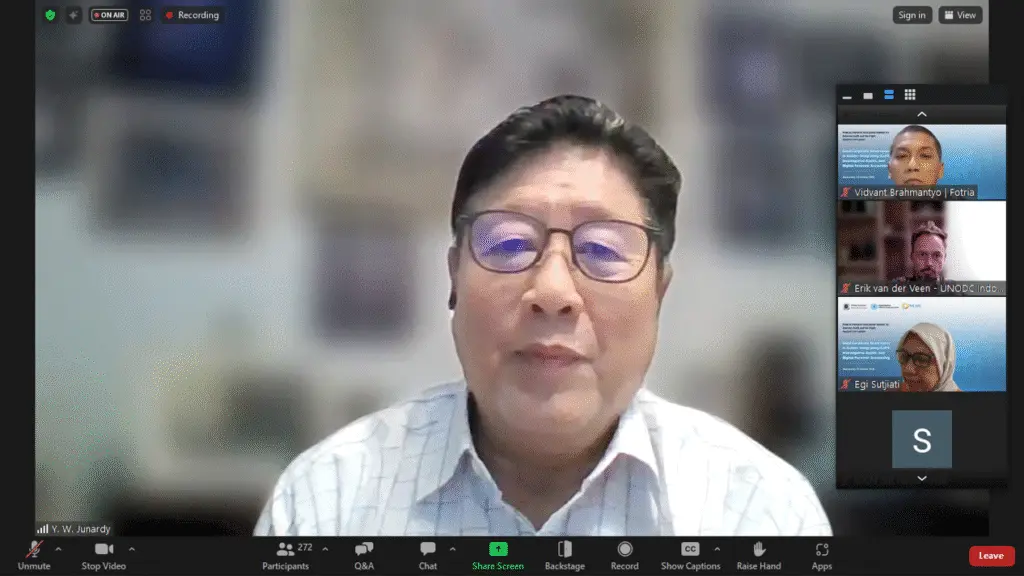
In his opening remarks, Y.W. Junardy, President of UN Global Compact Network Indonesia, underscored that robust governance systems are the foundation of sustainable and ethical business. He emphasized that strong corporate governance not only drives operational excellence but also supports the UN Global Compact’s 10th Principle on Anti-Corruption and the broader Sustainable Development Goals (SDGs) 16 and 17 on peace, justice, and partnerships.
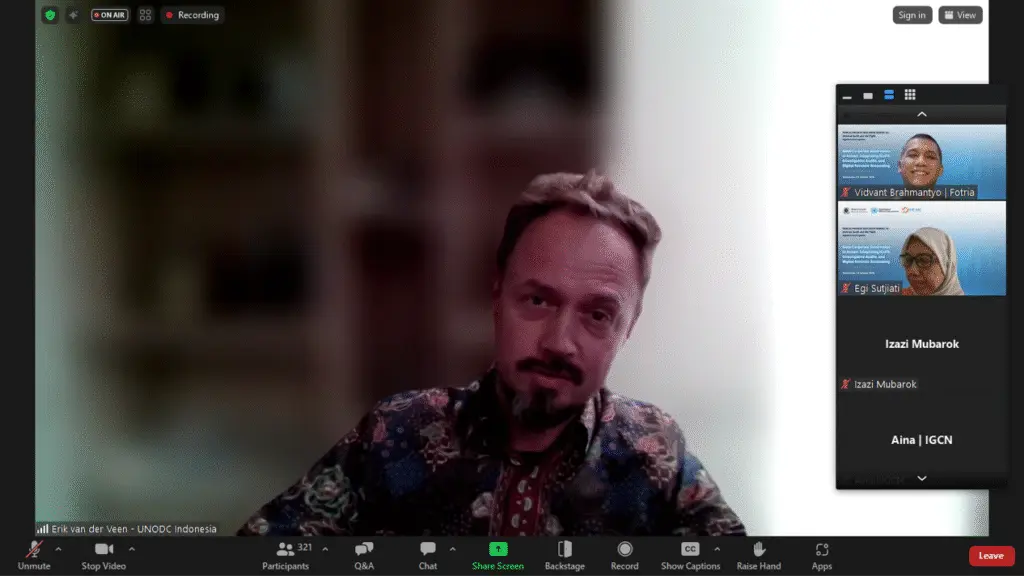
Echoing this, Erik van der Veen, Head of Office, UNODC Indonesia, noted that good governance builds trust and protects value — especially in the rapidly evolving digital landscape, where even small vulnerabilities can escalate into major risks.

The session featured distinguished speakers who shared practical insights and frameworks for strengthening governance from within:
- Vidvant Brahmantyo, CEO of Fotria and Audit Committee Member of PT Penjaminan Infrastruktur Indonesia (Persero), highlighted the importance of strong internal controls and the Three Lines Model in maintaining transparency and accountability.
- Kiki Fauzia Bidari, Head of Forensic Accounting Team at KPK (Indonesia’s Corruption Eradication Commission), encouraged internal auditors to evolve from “compliance checkers” into proactive protectors. “The cost of silence,” she reminded participants, “is always greater than the cost of vigilance.”
- Izazi Mubarok, Chair of the Indonesian Digital Forensics Association (AFDI), demonstrated how digital forensics can transform compliance into intelligence — turning data into evidence of integrity and making ethical governance measurable and traceable.
The discussion concluded with an engaging Q&A session, where participants shared over 30 insightful questions and ideas, reflecting strong interest and commitment to advancing integrity-based governance.
The session reaffirmed that Good Corporate Governance (GCG) is not merely a compliance exercise but a strategic enabler of trust, transparency, and accountability. As organizations navigate complex risks and digital transformation, internal auditors and governance leaders play a pivotal role in safeguarding corporate values and public trust.
Through this dialogue series, IGCN continues to strengthen collaboration between the public and private sectors in building a culture of integrity and ethical leadership. The partnership with UNODC and IIAC underscores a shared commitment to driving collective action against corruption and promoting good governance as a pillar of sustainable development.
Stay tuned for the next session of the Public-Private Dialogue Series — and join us in advancing integrity through good governance.